Diagnostic validity
Compare potential constraints against expert-reviewed cases. Track which explanations the workflow recovers and which it misses.
Innovation & research
A proposed research programme for evaluating growth diagnosis, evidence quality and human decision support.
Product differentiation
Reporting surfaces changes in performance. Growth Clarity Intelligence is designed to carry those observations into a structured investigation where teams can connect signals across functions, examine competing explanations and compare possible next actions.
The research question is whether this combination improves the relevance and traceability of investigations. Planned comparisons would examine whether connected context changes which evidence reviewers consider, and whether an explanation makes it easier to assess a recommendation.

Research areas
Compare potential constraints against expert-reviewed cases. Track which explanations the workflow recovers and which it misses.
Compare graph-informed investigations with a baseline using the same case evidence without relationship context.
Ask decision-makers to trace insights to supporting evidence and identify where explanations leave important questions open.
Repeat evaluations across comparable cases and check sensitivity to missing data, definitions and time windows.
Evaluate the relevance of alternatives, quality of documented rationale and investigation effort in structured case exercises.
Test how the workflow flags uncertainty, handles conflicting information and prompts human review.
Validation plan
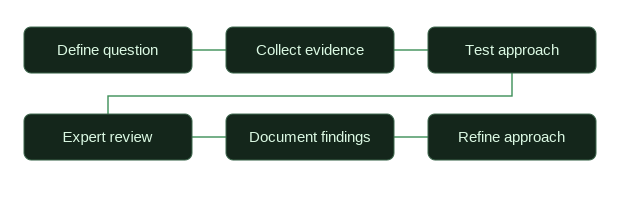
Each study would define a question, a baseline, case selection criteria and evaluation measures before testing. Planned methods include expert-reviewed cases, controlled workflow comparisons and interviews about how users interpreted the evidence.
Potential academic and industry collaborators could help design evaluations, review methods and contribute appropriate cases. Human oversight, limited data access and clear treatment of uncertainty would guide the research.
Where practical, studies would record failures and conflicting interpretations alongside successful examples. Results would inform scope, product design and pilot readiness.