Observe and investigate
Confirm that cohort windows are comparable. Inspect acquisition mix, onboarding completion and sales follow-up around the decline.
How it works
The proposed lifecycle takes a growth signal through investigation, evidence review and a human decision, then feeds the outcome back into organisational knowledge.
The intelligence lifecycle
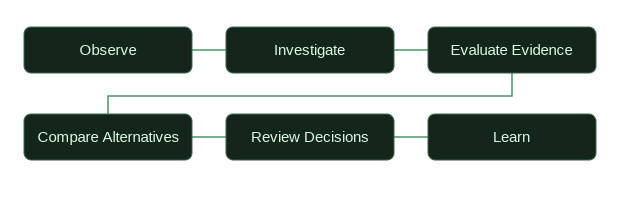
Identify performance shifts and patterns using comparable periods, consistent definitions and relevant baselines.
Trace the signal through connected business activities and generate plausible explanations.
Assess source relevance, coverage, reliability and uncertainty. Record supporting and conflicting observations.
Consider competing explanations and potential interventions against shared decision criteria.
Have business leaders or domain experts review the reasoning and decide what to test or act on.
Capture the choice, rationale and observed outcomes to inform future investigations.
Illustrative SaaS example
In this synthetic scenario, trial-to-paid conversion falls from 22% to 15% over six months. The example shows how a team could investigate the decline using the proposed workflow.
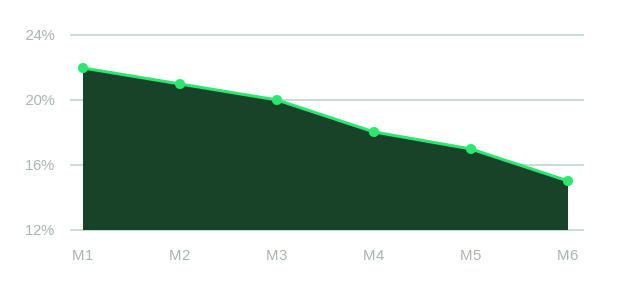
Confirm that cohort windows are comparable. Inspect acquisition mix, onboarding completion and sales follow-up around the decline.
Check whether conversion changed within acquisition channels. Compare that explanation with onboarding friction and delayed follow-up, and record incomplete event coverage.
Have the growth and product leads choose a bounded onboarding test or request further evidence. Record the rationale and compare reviewed outcomes with an appropriate baseline.
Decision review
A review should capture which explanations are supported, what remains uncertain, who owns the decision and how the outcome will be evaluated. The team can also decide that the evidence is insufficient and specify the next measurement to collect.
